This Labor Day, Thank the People Who Do One of the Most Crucial Jobs in America.
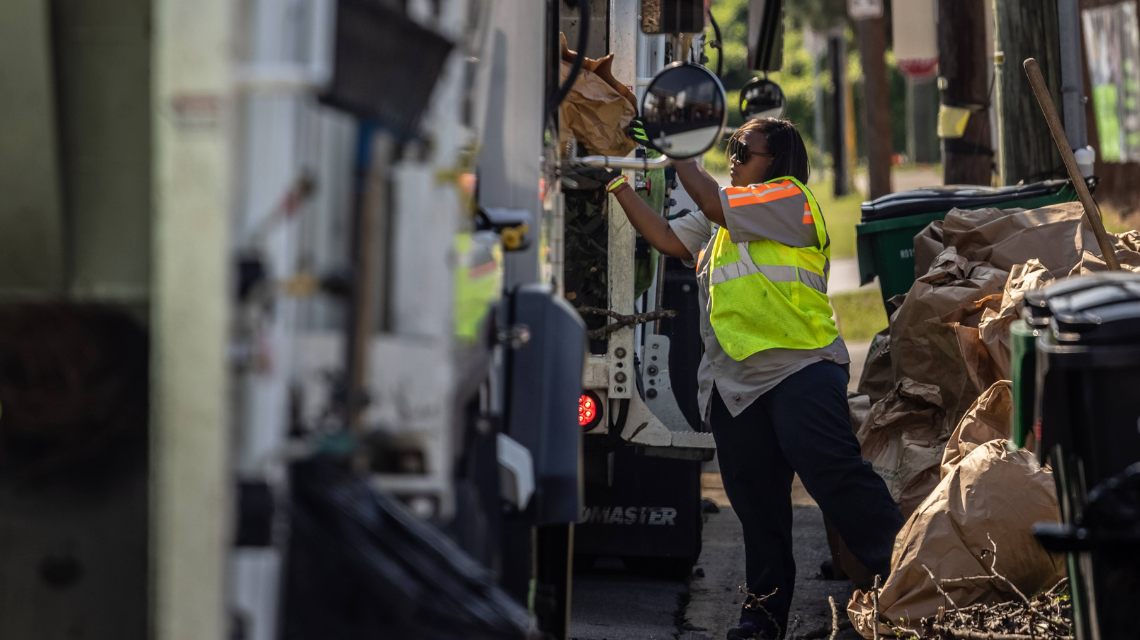
Labor Day exists because workers demanded it. In 1882, ten thousand of them walked off the job in New York City and marched from City Hall to Union Square, unpaid, to say their work mattered enough to be recognized. Twelve years later, it became a federal holiday. It is worth remembering that history today, because the industry we work in is still home to some of the toughest, most physically demanding jobs in the country, and the people doing them rarely get the thanks they've earned.
A job most people never think about, until it doesn't happen. Nobody notices trash collection until a truck is late, a can gets missed, or a strike leaves bags piling up on the curb. That invisibility is part of what makes the work hard to appreciate. But the data tells a different story about what this job actually costs the people who do it.
The numbers are sobering. According to the Bureau of Labor Statistics, refuse and recyclable material collectors had a fatal injury rate of 37.4 per 100,000 full-time workers in 2024, making it the fifth deadliest occupation in the country. That's an improvement from 2023, when the rate hit 41.4 and the job ranked fourth deadliest, but it still puts collection work behind only logging, fishing, roofing, and structural iron and steel work in terms of on-the-job risk. BLS counted 36 fatalities in the broader collector category in 2024, with transportation incidents remaining the leading cause of death on the job, exactly the kind of risk that comes from working on foot alongside traffic, hanging off the back of a truck, and making dozens of stops an hour in conditions the rest of us never have to think about.
SWANA CEO Amy Lestition Burke put it plainly when the 2024 data came out: "Waste and recyclable materials collectors perform vital work that safeguards public health and the environment, and their lives must never be the cost of doing that work." That statement is worth repeating on a day built around honoring labor.
The work doesn't pause for extreme conditions, either. From crews working through triple-digit heat indexes to keep pickup schedules on track, to the MRF sorters, dump truck drivers, dispatchers, and mechanics who keep the entire system moving behind the scenes, the people in this industry show up in conditions that would shut down plenty of other jobs. Every one of them, whether they're behind the wheel, on the back step, sorting a belt, or fixing a hydraulic line at 5 a.m. so a route can roll on time, is part of the public health infrastructure that keeps American communities functioning.
Sanitation work has its own place in labor history. Some of the most consequential moments in the American labor movement came from this exact workforce. The 1968 Memphis sanitation workers' strike, sparked after two collectors were crushed to death in a malfunctioning truck, became one of the defining labor actions of the civil rights era and drew Dr. Martin Luther King Jr. to the city days before his assassination. The strikers' simple demand, dignity and safety on the job, is still the right standard to hold this industry to nearly six decades later.
Our position: the collectors, drivers, MRF workers, technicians, and dispatchers who run this industry deserve more than a once-a-year mention. They deserve safety equipment that actually gets used, training that's taken seriously, wages that reflect the risk, and a level of public respect that matches the essential nature of the work. Fatality and injury rates have ticked down in recent years, and that progress matters, but "safer than it used to be" is not the same as "safe enough."
So today, on the holiday built for workers, we're saying it plainly: thank you. To everyone who has ever run a route, worked a line, driven a truck, or kept the trucks running, the work you do protects public health, keeps neighborhoods livable, and rarely gets acknowledged for how hard and how dangerous it really is. We see it, and we're grateful for it.
Related reading

Freedom Comes With a Cleanup Crew: The Hidden Work Behind America's Biggest Holiday
Every Fourth of July ends the same way. The fireworks fade. The grills cool down. The crowds head home. And then the cleanup begins. While millions of Americans celebrate Independ…

June Is Safety Month. AI Can Help Make Every Month Safer.
Every week, thousands of sanitation workers climb onto trucks, navigate busy streets, lift heavy containers, and work around moving machinery. It remains one of the most physicall…
What Actually Happens After Your Trash Truck Drives Away
Every week, millions of garbage trucks collect waste from homes and businesses across the country. Once the truck disappears around the corner, most of us never think about it aga…