Fire Season Isn't Ending: What the Latest Waste Facility Fire Data Means for Your Operation
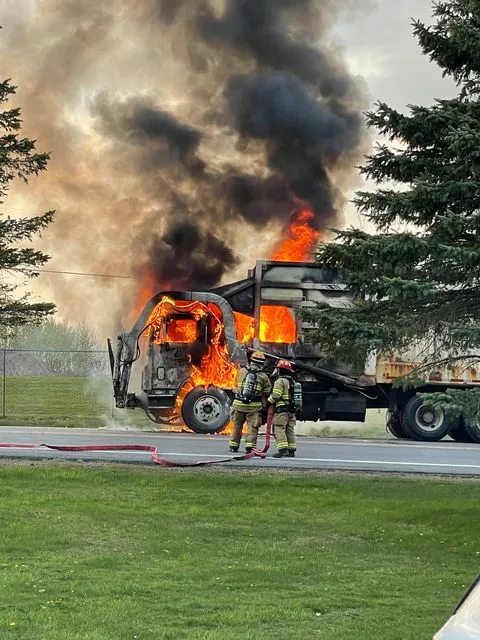
Fire Prevention Week runs October 4 to 10, and this year's theme is lithium-ion battery hazards. For anyone running trucks or a tipping floor, that is not an awareness slogan. It is a description of your week.
Waste360's September 2026 Fire Report counted 49 fires at waste and recycling facilities in August, tied for the highest August in 10 years. Through the first eight months of 2026, the total stands at 293, the third-highest eight-month count on record. Catastrophic-loss fires reached 74 through August, already above 2024's full-year total of 71.
Why this matters to haulers and MRFs
The report also flags a change in timing. The traditional summer spike is no longer fading after August, which suggests a fire season closer to five or six months than 90 days. If your fire prep ramps up in June and winds down in September, the calendar is working against you.
The picture is not all bad. Fires in the waste, paper, and plastics category fell 9.9 percent year over year (161 to 145), the first pullback in that category since 2020. The report ties early-year improvement to expanded education and battery take-back programs. Prevention work appears to be moving the needle, just not fast enough.
Collection vehicles are part of the problem set
Local fire officials are saying the same thing. In Mecklenburg County, North Carolina, WCCB reported nearly 40 battery-related fires this year across recycling centers, the landfill, and collection vehicles. A single battery in a packer body can turn into a total vehicle loss and a facility fire at the tip.
Consider what that means in practice. A fire that starts in a truck at 2 p.m. can become a fire at the transfer station by 3. The cost is not just the equipment: it is lost routes, missed service, overtime, regulatory attention, and strained customer relationships.
What operators can do right now
Extend your fire-readiness window. Keep inspections, extinguisher checks, and thermal monitoring at peak-season intensity through at least November.
Train drivers on the first 60 seconds. Know when to dump the load in a safe location, who to call, and what not to do. Rehearse it, do not just post it.
Document every thermal event, including near-misses. Smoke from a hopper, a hot spot on a tipping floor, a popped battery on a sort line. Patterns show you where the problem enters your system.
Push drop-off options to customers. Public messaging works best when it is specific: batteries do not go in the cart, and here is where they do go. Point residents to your county or municipal drop-off sites.
Talk to your insurer before an incident. Ask what they expect for detection, housekeeping, and loss-control. Know your coverage terms and renewal timing before you need them.
Watch the e-cigarette stream. The report notes 480,000 vapes passed through four UK MRFs in June and July of 2026, a record. Disposable vapes are a growing ignition source and a reminder that the problem is not limited to phones and power tools.
Where responsibility lands
Haulers did not make these batteries, but they absorb the damage. Who should pay for fire losses is becoming a live policy conversation, and operators with solid incident records will be better placed to make their case to customers, municipalities, and regulators.
Bottom line
The data says fire season is longer, losses are bigger, and prevention is working only in pockets. Treat Fire Prevention Week as a reason to audit your own procedures, not a week of social posts. The operators who keep guard up in October are the ones who keep trucks and facilities running in December.
Related reading

Permanent Fire Season: Batteries Have Changed the Risk Math for MRFs and Haulers
Waste360’s latest Fire Report says the quiet part out loud: our industry is now operating in a chronically elevated fire-risk environment. That’s not a safety memo — it’s a business model change for facilities, fleets, and insurers.

Forty Fires in May: Lithium Batteries Are Rewriting MRF Ops and Pricing
Another month, another pile of preventable fires. This isn’t a public-education problem anymore — it’s an operational control and pricing problem for every hauler, MRF, and transfer station.

Lithium Batteries Are Lighting Up Routes. The Industry’s Out of Excuses
At the Waste Leadership Summit, operators said the fires are getting worse, not better. Here’s what that means for routes, contracts, and capital buys.