Forty Fires in May: Lithium Batteries Are Rewriting MRF Ops and Pricing
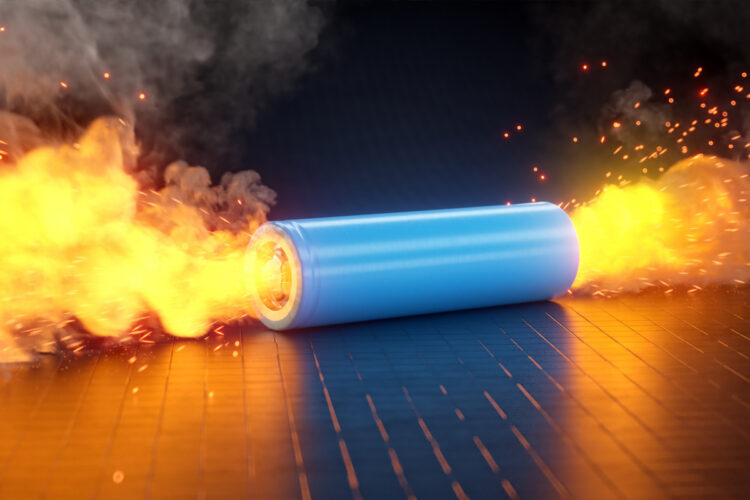
Battery-driven fires aren’t a once-a-quarter scare story anymore; they’re a weekly line item. E-Scrap News reports a June tally from safety analyst Ryan Fogelman showing 40 fire incidents at facilities in the U.S. and Canada in May alone. That’s not a blip — that’s a system failure. Our angle: operators who keep treating lithium-ion as random contamination are absorbing an unpriced hazard. The fix is operational controls tied to billing, routing, and facility design — with real teeth.
The latest count — and what it signals
E-Scrap News, citing Fogelman’s June fire report, puts May’s facility fire incidents at 40 across the U.S. and Canada. These aren’t just e-scrap processors. Fires are popping in MRFs, transfer stations, and mixed solid waste lines where small lithium-ion cells slip through. The pattern is familiar: a vape, power tool pack, e-bike battery, or laptop cell finds pressure, heat, or a puncture, then thermal runaway does the rest. The number matters because every incident means downtime, water damage, lost throughput, and insurer scrutiny — and those costs are landing on operators who didn’t cause the hazard and often can’t recover it under current contracts.
Why the stream keeps igniting
As reported by Resource Recycling’s E-Scrap News, the volume of consumer lithium-ion in everyday waste keeps rising. Vapes and buttoned-up device batteries are compact, easy to conceal in bags, and hard to catch on fast lines. On the route side, rear-load and front-load compaction can trigger smoldering events that fully ignite on the tipping floor. At facilities, pre-sort lines miss dark, palm-sized packs; a loader bucket or baler ram does the rest. Meanwhile, many municipalities still lack convenient battery drop-off, so residents “wishcycle” cells into curbside carts. That pushes the hazard downstream to the people with the least control and the highest exposure.
What operators can do now — controls that actually bite
Here’s what we see working operationally when it’s done as a system, not a poster campaign:
- Inbound control: Add a pre-tip check protocol for loads from known high-risk generators (multi-family, campuses, e-commerce returns, retail). Create a holding area and SOP for isolating suspected battery loads.
- Routing segmentation: Stand up dedicated e-waste/battery routes or scheduled on-demand pickups to siphon risk out of MSW and single-stream. Don’t let price be the only difference — lock policies into service terms.
- Facility detection: Thermal imaging on tipping floors and bunkers; camera analytics on lines to flag batteries and vapes; audible alerts tied to stoppage SOPs. Pair with quick-access dry-chem/Class D capability and staff drills.
- Contracting and pricing: Explicit battery contamination clauses, incident fees, and a battery-risk surcharge for target segments. Write in the right to reject or reschedule risky loads.
- Customer channels: Retail and property manager partnerships for battery drop points with scheduled collections. Close the loop with point-of-sale takeback where possible.
- Data discipline: Record every near-miss and incident with time, route, generator, and material context. Use the trend to reprice, retrain, or re-route.
The Bond4 Tech Take
We think the industry has to stop “educating harder” and start repricing and re-routing risk. If you’re not charging a battery risk fee by Q3, you’re subsidizing fires for your riskiest customers and telling your safer ones their diligence is worth zero. The operators we expect to outperform are making three concrete moves:
- Hardwiring battery exceptions into dispatch: tag high-risk accounts, trigger pre-tip checks, and auto-route flagged addresses to alternate disposal or e-waste pickup. This isn’t a driver memo — it’s a rules engine.
- Instrumenting where ignition happens: thermal sensors in transfer pits and bunkers, line-side video analytics for battery/vape detection, and event workflows that stop conveyors, notify supervisors, and log incidents to the account record.
- Monetizing the hazard transparently: a published battery contamination fee, a monthly battery-risk surcharge for select segments, and SKUs for scheduled battery collections. Tie those SKUs to service verification so billing isn’t a fight.
Expect insurers to start demanding documented controls and incident histories; facilities without detection and suppression will see premiums and deductibles rise or coverage narrow. On the M&A side, plants with thermal imaging, looped SOPs, and clean incident logs will trade richer. Bottom line: treat lithium-ion as its own product stream with its own pricing and routing. The operators who encode that into software and contracts will keep uptime — and margin — while everyone else keeps drying out the tipping floor.
Book a meeting with Bond4Waste
Pick a time and add your details — or we'll reach out if none work.
Researched and drafted with AI assistance by the Bond4Waste editorial team. All credit for original reporting goes to E-Scrap News.
Related reading

Lithium Batteries Are Lighting Up Routes. The Industry’s Out of Excuses
At the Waste Leadership Summit, operators said the fires are getting worse, not better. Here’s what that means for routes, contracts, and capital buys.

Lithium-ion fires aren’t a PR problem — they’re an ops problem. CDRA’s coalition push makes that plain.
A cross-association safety push signals the industry is done treating battery fires as background noise. If you run routes or a floor, the implications hit dispatch, capex, contracts, and insurance — fast.

Battery and vape fires aren’t a UK problem — they’re a wake-up call for every MRF and hauler
A new UK tracker shows publicly reported fires from binned batteries or vapes every nine days. That’s not a curiosity across the pond; it’s a forecast for anyone running routes and lines where lithium-ion shows up uninvited.