When the Load Ignites: A Collection Truck Fire Playbook for Haulers
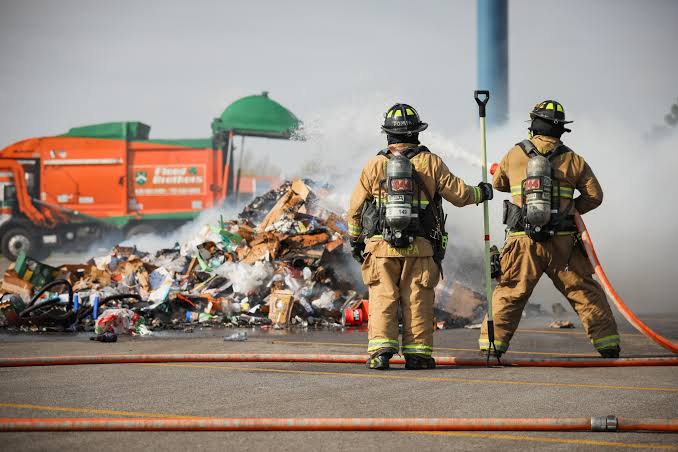
On September 8, a driver in North Smithfield, Rhode Island noticed smoke from a Waste Management truck on a residential street. He drove it out of the neighborhood to a transfer station and dumped the burning load. Firefighters then used a thermal-imaging camera to locate what they believe started it: a lithium-ion battery pack. No one was hurt.
That outcome was not luck. It was a driver who knew what to do. Similar incidents this year in Roseville, California and San Jose, where four garbage truck fires were logged in a single month, show how common the trigger has become.
Why this matters to your operation
A crushed battery in a packer body does not give you much time. Officials in San Jose put it plainly: a single damaged battery is enough to trigger a dangerous compaction fire inside a truck. EPA's analysis of lithium-ion battery fires in waste and recycling found hundreds of documented incidents at facilities and in collection vehicles, and the real number is almost certainly higher because many small fires go unreported.
You cannot control what residents put in the cart. You can control how your crew responds in the first 60 seconds.
The playbook
Decide the dump rule before the fire, not during it. Drivers should know, in writing, where they are authorized to discharge a burning load: an open lot, a transfer station tipping floor, or a spot designated with the local fire department. Moving a smoking truck out of a residential block, as the North Smithfield driver did, only works if the driver already knows where to go.
Make "call 911 first" the default. Dispatch should be notified immediately, and the driver should not try to fight a battery fire with a handheld extinguisher. Lithium-ion fires can reignite, and a driver's priority is distance and a clear escape path.
Protect the cab and the crew. Stop the compaction cycle, set the brake, and exit. Equipment can be replaced. If the truck is near structures, vehicles, or fuel, tell responders as soon as they arrive.
Tell firefighters what they are dealing with. In Rhode Island, a thermal-imaging camera helped crews find the battery pack inside the discarded load. Responders who know a battery is suspected can plan for reignition and proper handling of the pack.
Plan for cleanup. After a street dump, someone has to remove the debris, document the scene, and coordinate with the fire department. Assign that role ahead of time.
Build the paper trail
Every fire should generate the same record: truck number, route, location, time, suspected source, who responded, and what it cost in repairs and downtime. That data is how you spot a problem route, justify a customer education push, and have a grounded conversation with your insurer.
Pay attention to patterns. If the same commercial stops, multifamily properties, or neighborhoods keep producing battery contamination, that is where a targeted mailer or a driver tag on the cart will do the most good.
Reinforce the public message
Municipal guidance is consistent: keep batteries out of both trash and recycling carts, tape terminals, and use household hazardous waste drop-offs or doorstep programs where offered. If your contract or franchise agreement gives you a voice in public outreach, push for the simplest message possible, and make sure drivers can repeat it at the curb.
Train the drill
A playbook nobody has practiced is a document in a binder. Run a short tabletop exercise with drivers and dispatchers this quarter: smoke reported on route, residential street, nearest authorized dump site is 12 minutes away. Who calls whom, and in what order? You will find the gaps in 15 minutes.
Key Takeaways
Battery fires in collection trucks are no longer rare enough to treat as bad luck. The operations that come through them without injuries have a defined dump protocol, a clear call chain, and drivers who have rehearsed both. Settle those three things before the next smoking truck, not after.
Related reading
How to Prevent Battery Fires in Garbage Trucks: A Practical Guide for Waste Haulers
Every waste hauler understands that a garbage truck fire can quickly turn into a dangerous and costly emergency. While mechanical failures and hot loads still occur, one hazard ha…

Lithium-ion fires aren’t a PR problem — they’re an ops problem. CDRA’s coalition push makes that plain.
A cross-association safety push signals the industry is done treating battery fires as background noise. If you run routes or a floor, the implications hit dispatch, capex, contracts, and insurance — fast.
Fire Season Isn't Ending: What the Latest Waste Facility Fire Data Means for Your Operation
Fire Prevention Week runs October 4 to 10, and this year's theme is lithium-ion battery hazards. For anyone running trucks or a tipping floor, that is not an awareness slogan. It…