NYC Sanitation Workers Are Getting Stuck More Often, and GLP-1s Are a Big Reason Why
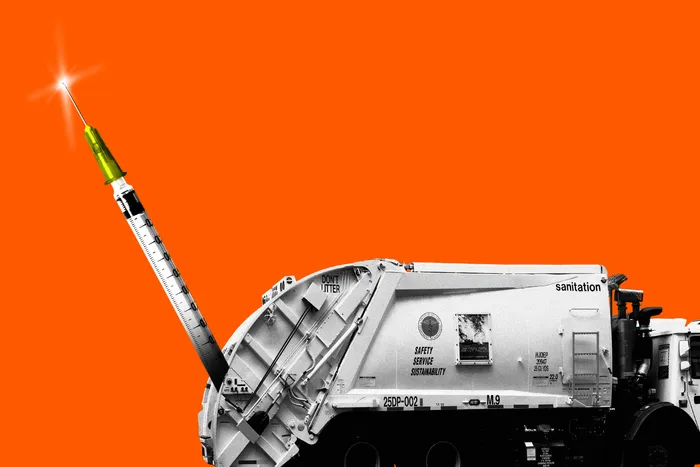
New York City's Department of Sanitation confirmed 49 needle-stick injuries among its workers as of August 10, up from 46 for all of 2025 and just 18 in 2020, according to CBS News New York. The city is responding by raising the fine for improper needle disposal from $100 to $250. Doctors point to a familiar driver: the surge in Americans using injectable medications, including GLP-1 drugs like Ozempic, Wegovy, and Mounjaro.
This isn't a New York story. It's a preview.
GLP-1 prescriptions have climbed nationwide, not just in dense cities with curbside collection. Every hauler running residential routes, every MRF sorting single-stream material, and every transfer station crew handling mixed loads is exposed to the same risk DSNY is now tracking. A drug pen with a fixed needle looks nothing like a syringe most crews were trained to expect, and it's landing in general trash and single-stream recycling bins at a scale nobody planned for.
DSNY officials are careful to note they can't confirm the exact source of every stick. But healthcare providers point out that injectable medication use is broader than GLP-1s alone: insulin, EpiPens, and fertility treatments like IVF injections all rely on similar fixed-needle pens, and all of them show up in the waste stream the same way. GLP-1s are simply the fastest-growing category, which is why the trend line matters more than the exact cause of any one injury.
The regulatory groundwork already exists, most fleets just aren't using it.
OSHA's Bloodborne Pathogens Standard, updated under the Needlestick Safety and Prevention Act, already covers waste management personnel, not just healthcare workers. Employers with occupational exposure risk are required to maintain an exposure control plan, provide sharps injury logs, and offer post-exposure evaluation. Estimates cited by OSHA put occupational sharps exposures at roughly 3 million annually, and waste and mortuary workers are named explicitly as at-risk groups (see OSHA's Bloodborne Pathogens quick reference). If your safety program hasn't been updated since before GLP-1s went mainstream, it's worth a second look now, not after an incident report.
The disposal instructions residents get are inconsistent, and that's the root of the problem.
The FDA's guidance is clear: sharps should go in an FDA-cleared container or a heavy-duty container like a labeled laundry detergent bottle, never loose in the trash or recycling (see FDA sharps disposal guidance). But most residential customers have never seen that guidance, and pharmacies rarely hand out a sharps container with a GLP-1 prescription. The pen itself, once the needle is capped or disposed of separately, still isn't recyclable in most single-stream programs, so it ends up wherever is easiest.
What haulers can do this quarter:
Update your exposure control plan. If it predates 2023, assume it doesn't reflect current sharps volume. OSHA requires annual review regardless.
Retrain crews specifically on GLP-1 pens. They don't look like a syringe. Drivers and sorters need to know the new shape of the risk, not just the old one.
Stock puncture-resistant gloves and sharps containers on every truck, not just at the yard, so an in-route stick doesn't turn into an uncontained hazard.
Push a public education campaign with your municipal partners. DSNY's PSA push is a template. A single insert with the water bill or a QR code on the cart does more than a hundred internal memos.
Log every stick, even minor ones. A rising trend only shows up in the data if crews report it. Underreporting is the fastest way to lose the budget argument for better PPE next year.
Bottom line
GLP-1 use isn't slowing down, and neither is the volume of sharps riding along with everyday trash and recycling. New York is simply the first city with the reporting infrastructure to put a number on what's likely happening everywhere. Haulers who treat this as a training and PPE issue now will avoid a much more expensive conversation with their insurer, or their crew, later. The tools to manage this risk already exist. The gap is awareness, not technology, and awareness is the one thing every operator can fix without waiting on a regulator.
Related reading

New York’s PFAS crackdown just reset the risk math for leachate and industrial loads
Two Albany bills would harden drinking water limits and force disclosure of PFAS discharges. That shifts cost, liability and scheduling pressure onto landfills, haulers and their municipal customers—starting with sampling, contracts and where you can take a load.

NYC Trash Bin Mandate 2026: Deadlines, Rules, and What Haulers Need to Know
New York City's trash containerization mandate just entered its final stretch. As of June 1, every residential building with one to nine units has been required to set trash out o…
Inside NYC's Trash Revolution: New Mayor, Faster Timeline, Same Bottlenecks
New York City's Department of Sanitation just reshuffled the launch schedule for its commercial waste zones, and the reason isn't politics. It's mergers. When Interstate Waste Ser…