Who Pays When a Battery Fire Destroys a Garbage Truck? California Is Shifting the Debate.
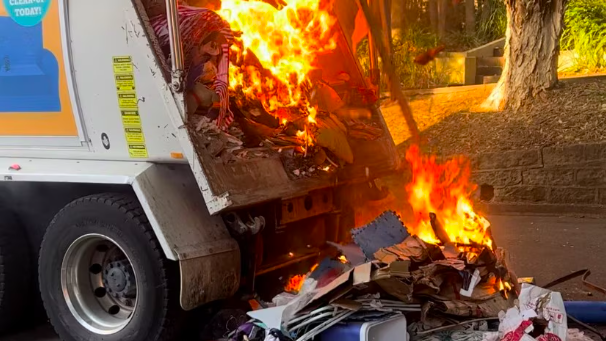
A new battery recycling law and tougher landfill temperature rules put waste haulers at the center of a growing debate over fire risk, insurance costs, and who should pay for the consequences of improperly discarded batteries.
For waste haulers, a discarded battery can be much more than a recycling problem. It can become a truck fire on a collection route, a blaze at a transfer station, or millions of dollars in facility damage.
And when that happens, someone has to pay.
California is taking steps to address the problem. In September 2026, Gov. Gavin Newsom signed SB 501, expanding the state's battery stewardship program to cover more rechargeable batteries, including those used in e-bikes and outdoor lawn equipment. He also signed AB 28, establishing new protocols for elevated temperature events at landfills.
The two laws address different challenges, but both raise an important question for the waste industry: How much of the financial burden should fall on the companies managing our waste, and how much should fall on the manufacturers producing the products that enter the waste stream?
The Hidden Cost of a Battery Fire
Lithium-ion batteries are increasingly common in everyday products, from e-bikes and power tools to lawn equipment and portable electronics. When these items are thrown into ordinary trash or recycling bins, batteries can be crushed, punctured, or damaged during collection and processing, potentially triggering fires.
For haulers, the consequences can extend far beyond the initial emergency.
Vehicle damage: A burning load can take a garbage truck out of service, disrupting routes and requiring costly repairs or replacement.
Facility shutdowns: A fire at a transfer station, recycling center, or material recovery facility can damage equipment, interrupt operations, and reduce revenue.
Worker safety: Drivers, sort-line employees, and other frontline workers face serious risks when batteries ignite unexpectedly.
Insurance and operating costs: Claims, deductibles, downtime, and potential changes in future premiums can add to the financial burden.
These are not hypothetical concerns. California lawmakers cited major fire incidents when making the case for expanding battery stewardship, including a 2016 fire at a San Carlos waste facility that reportedly caused more than $8.5 million in damage.
The challenge is that haulers often encounter these batteries only after consumers have discarded them. They may have little control over how a battery was designed, how long it was used, or whether it was disposed of correctly.
California's New Laws: Two Different Problems
California's latest legislation addresses both battery disposal and landfill temperature events.
SB 501: Expanding Battery Producer Responsibility
Signed in September 2026, SB 501 expands California's existing Responsible Battery Recycling Act to cover additional rechargeable batteries. The goal is to create more pathways for collecting and recycling batteries before they enter the conventional waste stream.
The legislation builds on an existing policy approach called extended producer responsibility, or EPR. Under EPR, manufacturers and other producers help fund the collection, recycling, or end-of-life management of the products they put on the market.
Supporters argue that expanding the program can shift some of the costs away from local governments, waste service providers, and ultimately ratepayers, placing more responsibility on the companies that make the products.
But the details matter. Funding battery collection and recycling is not the same as guaranteeing that a manufacturer will reimburse a hauler for every fire-related insurance claim or damaged truck.
Read the coverage from Resource Recycling and Waste Dive.
AB 28: Addressing Elevated Landfill Temperatures
The second law focuses on elevated subsurface temperatures at landfills, following years of problems at the Chiquita Canyon Landfill in Los Angeles County.
AB 28 establishes protocols for temperature-related events, including corrective action plans and additional oversight authority for CalRecycle. Certain violations can carry penalties of up to $100,000.
For landfill operators, these requirements could mean more monitoring, documentation, corrective work, and regulatory exposure when temperature problems arise.
The important distinction is that AB 28 addresses landfill temperature events, not battery fires generally. Together, however, the two laws underscore the growing financial and regulatory risks facing waste operators.
The Insurance Question: Who Ultimately Bears the Risk?
For haulers, the policy debate has a very practical dimension: what happens to the balance sheet when a battery ignites?
Commercial auto, property, and general liability policies may respond to different aspects of an incident, depending on the policy language, the type of damage, and the circumstances. Coverage is not automatic, and exclusions, deductibles, limits, and disputes over responsibility can all affect the outcome.
Even when insurance covers a loss, a serious incident can still leave an operator facing deductibles, lost operating time, replacement costs, and other expenses. Repeated claims may also complicate renewals or contribute to higher premiums, depending on the insurer and the company's loss history.
This is where EPR becomes particularly relevant to the industry's long-term economics.
If producer-funded programs improve collection and recycling access, fewer batteries may end up in ordinary waste loads. That could help reduce fire exposure over time. But prevention is only part of the equation. Haulers also have an interest in understanding how the costs of incidents are allocated, whether existing insurance adequately covers their risks, and whether future stewardship programs can do more to address the consequences of improper disposal.
The key question is not simply who pays to recycle a battery. It is who bears the financial risk when that battery causes damage.
California's new laws do not automatically transfer every fire-related expense to manufacturers. They do, however, move the state further toward a system in which producers share responsibility for managing batteries at the end of their useful lives.
What Waste Haulers Should Be Watching
For operators, the policy debate is a reason to take a closer look at both day-to-day operations and long-term financial exposure.
1. Review battery-related fire prevention procedures. Make sure drivers and facility employees understand how to identify, isolate, and report suspected battery hazards under applicable safety procedures.
2. Revisit insurance coverage. Work with brokers and insurers to understand how vehicle fires, facility damage, business interruption, deductibles, and potential liability are handled under existing policies.
3. Track changing EPR requirements. California's expansion of battery stewardship could affect collection systems, recycling pathways, and the responsibilities of participating businesses. Operators should follow implementation rules and determine whether new programs create practical opportunities for safer battery management.
4. Improve operational visibility. Incident records, collection data, route information, and facility reports can help operators identify recurring hazards, understand where problems occur, and document the operational impact of disruptions.
Better data will not eliminate battery fires, but it can help waste companies make more informed decisions about prevention, resource allocation, and risk management.
A Bigger Question for the Future of Waste Management
As batteries become more common in consumer products, the waste industry is being asked to manage risks that begin long before a garbage truck arrives at a customer's curb.
California's legislation reflects a growing recognition that the cost of a product does not end at the checkout counter. Its environmental and safety consequences can follow that product all the way into a collection truck, a recycling facility, or a landfill.
For haulers, the goal is straightforward: safer operations, fewer costly disruptions, and a fairer distribution of the costs associated with products they did not manufacture.
Whether expanded producer responsibility will deliver that outcome depends on how the programs are implemented and how effectively they reduce batteries entering the wrong waste streams.
One thing is clear: when a battery fire destroys a truck or shuts down a facility, the cost can reach far beyond the person who threw the battery away. The industry now faces a critical question about who should carry that risk.
Related reading

Maryland’s Battery Commission Extends Its Mandate — Operators Should Expect EPR, Transport Rules and Insurance Heat
Lithium battery fires have gone from edge case to everyday risk. Maryland’s move signals where policy is headed next — and it’s squarely aimed at the operational pain points haulers and MRFs are already paying for.

Lithium Batteries Are Lighting Up Routes. The Industry’s Out of Excuses
At the Waste Leadership Summit, operators said the fires are getting worse, not better. Here’s what that means for routes, contracts, and capital buys.

Illinois just put batteries on notice. Haulers should, too.
Illinois’ expanded battery stewardship push isn’t just another recycling feel-good. It’s a signal that policymakers want lithium-ion risk out of the MSW stream—and they’re funding the alternatives. If you operate routes or a MRF in the Midwest, this changes your playbook.