Waste Industry M&A Just Hit a New Gear: What Record 2026 Consolidation Means If You're Still Independent
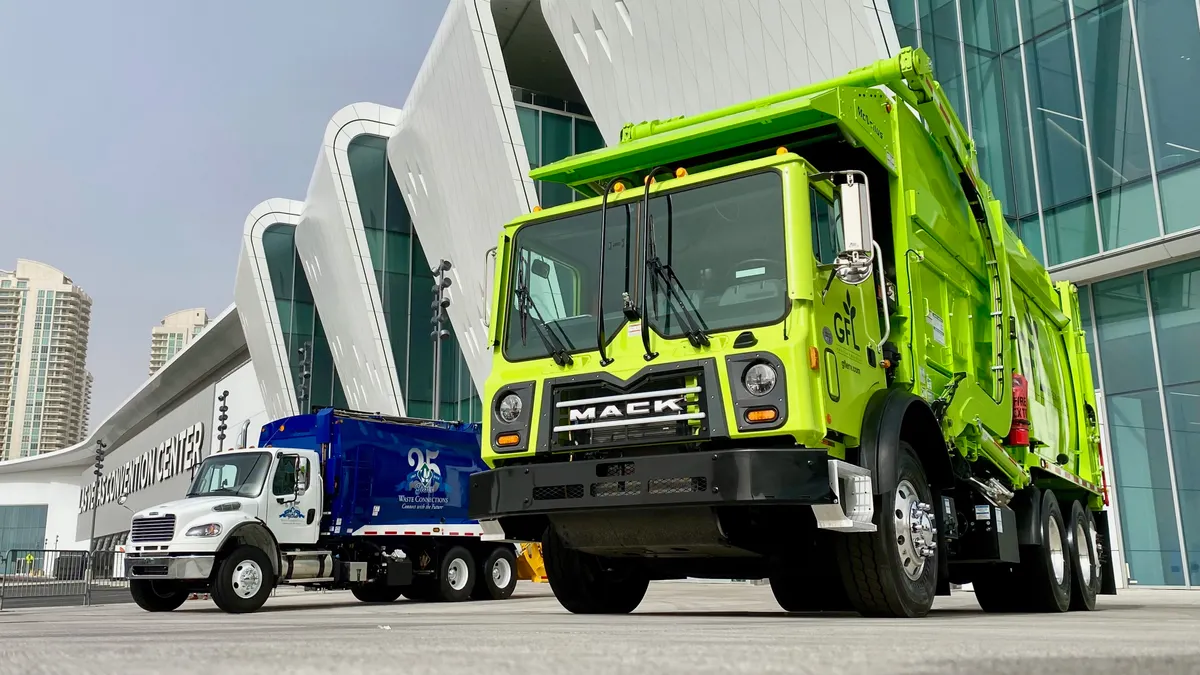
The publicly traded haulers just finished reporting second-quarter earnings, and the story underneath the numbers is consolidation moving faster than anyone projected. Republic Services now plans to spend roughly $1.2 billion on acquisitions in 2026, up from an original target of just over $1 billion, with $860 million already deployed in the first half. GFL Environmental has closed more than $435 million in annualized acquired revenue year to date and expects to deploy another $300–500 million before year-end. WM topped its own full-year acquisition guidance in Q2 alone, spending $235 million against an original $100–200 million target. Waste Connections and Casella each closed deals north of $100 million and $165 million in annualized revenue, respectively (Waste360).
Every management team on those earnings calls called its M&A pipeline "strong," with more activity expected in the second half. This isn't a one quarter blip, it's the shape of the industry for the rest of 2026.
Why it matters if you're not RSG or WM. If you run an independent hauling operation, this wave touches you whether or not you ever plan to sell. Some of you will get a call from a corp-dev team this year. Others will spend the next 12 months competing for the same commercial accounts, drivers, and permits against a buyer with a much larger balance sheet. Either way, the leverage in that conversation comes down to the same thing: how clean and defensible your operating data is.
What acquirers are actually buying. Public companies aren't paying premiums for trucks and containers those depreciate. They're paying for route density, contract retention, and margin they can trust. Coastal Waste & Recycling's CEO, reflecting on nine years of building his company through acquisitions, put it plainly: the deals that work are the ones where the numbers hold up under scrutiny and the culture doesn't collapse post-close (Resource Recycling). That's true whether you're the one buying or the one being evaluated.
What due diligence teams look for, and what usually falls apart:
Route-level profitability, not just fleet-level revenue. If you can't show which routes and customers actually make money versus what's cross-subsidized, a buyer will assume the worst and price accordingly.
Billing and contract data that reconciles cleanly. Spreadsheet based billing with manual overrides is a red flag. Acquirers want to see that pricing, fuel surcharges, and contract terms are systematized and auditable.
Driver and dispatch efficiency metrics. Stop-per-hour, missed-pickup rates, and route adherence tell a buyer how well-run the operation actually is day to day, not just what the P&L says.
Clean scale ticket and disposal cost data. If dump tickets are still paper and manually keyed, that's weeks of due diligence friction and it signals the same friction exists in daily operations.
The counter-play. Not every independent wants to sell, and plenty shouldn't. The good news is that the same operational discipline that makes a company acquisition-ready also makes it more competitive against the consolidators in the meantime. Management teams on this quarter's earnings calls specifically credited AI-driven routing and pricing tools with expanding margins by 30 to over 100 basis points, even as fuel and commodity costs pressured the business (Waste360). That's the same playbook available to a 15-truck operation as it is to WM, the technology gap, not the fleet-size gap, is what's actually closing the distance between independents and the majors.
Bottom line:
Consolidation isn't slowing down in 2026, and the acquirers have more capital to deploy than they originally budgeted. Whether you're positioning to sell, positioning to stay independent, or positioning to be the acquirer in your own region, the same fix applies: get your route, billing, and disposal data into a system that produces answers instead of spreadsheets. That's the difference between negotiating from strength and hoping the numbers hold up when someone else finally checks them.
Bond4Waste centralizes dispatch, routing, billing, and scale ticket data in one platform, so your operation's real performance is always ready to show whether the audience is a buyer, a lender, or your own ops team. See how it works.
Related reading

Big money back on the move: Q1 waste M&A nears $700M
Deal activity among major waste firms accelerated to nearly $700 million in Q1 2026. The focus: route density, market share in fast‑growing regions and tighter vertical integration.

BlackRock-backed E360S plants a flag in Michigan — and a new round of U.S. consolidation pressure
A well-capitalized Canadian hauler just crossed the border. That matters for every independent in the Great Lakes and beyond because this is the start of a roll-up playbook, not a one-off tuck-in.

Canada’s E360 Jumps the Border: What a New Consolidator Means for U.S. Haulers
Environmental 360 Solutions just bought Marcotte Disposal to plant a flag in the U.S. That’s not just M&A news — it’s a pricing and operations signal for every independent in its path.