Could Better Truck Monitoring Help Prevent the Next Fatal Cyclist Collision?
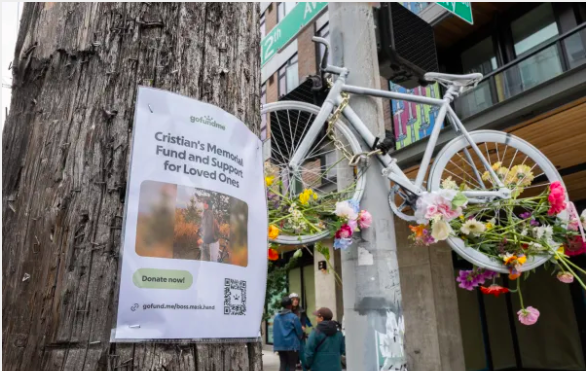
A Seattle cyclist's death is raising difficult questions about fleet safety. Could better cameras, blind-spot detection, and AI-powered alerts help prevent garbage trucks from turning into cyclists' paths?
A garbage truck can weigh tens of thousands of pounds. A cyclist riding beside it can be almost impossible to see from certain positions in the cab. When the two share a busy city street, a single missed check before a turn can have devastating consequences.
That danger is at the center of a wrongful-death lawsuit filed by the family of Christian Salyer, a 30-year-old Seattle elementary school teacher who was killed while riding his bicycle alongside a Recology collection truck.
According to reporting by KIRO 7, the collision occurred on June 1, 2026, at 12th Avenue and Yesler Way. Salyer was riding in a designated bike lane when the truck turned right across his path.
The lawsuit alleges that the driver failed to signal, check mirrors and surroundings, or slow down before turning. It also raises allegations about the company's driver training and supervision. The claims have not been adjudicated, and Recology has declined to comment on the pending litigation.
The tragedy leaves a difficult question for the waste industry: What additional safety measures could help a truck driver detect a cyclist before making a potentially fatal turn?
The Blind Spots That Make Garbage Trucks Dangerous
Large collection trucks have substantial blind spots around the front, sides, and rear. Cyclists can be particularly vulnerable when traveling alongside a truck approaching an intersection, where the vehicle may cross a bike lane to make a turn.
Traditional mirrors help, but they depend on drivers checking them at the right moment and correctly interpreting what they see. Even experienced drivers face demanding conditions on urban routes, with traffic, pedestrians, tight turns, frequent stops, and competing demands for attention.
Driver training and consistent mirror checks are essential. But safety should not depend on a driver's ability to notice every potential hazard without assistance.
This is where better onboard monitoring equipment can add another layer of protection.
Three Technologies That Could Make Collection Trucks Safer
1. AI-powered cameras that detect cyclists
Cameras mounted around the truck can provide views of areas that are difficult to see from the driver's seat. AI-enabled camera systems can go a step further by identifying vulnerable road users, including cyclists and pedestrians, and alerting drivers when someone enters a dangerous zone.
For example, if a cyclist is traveling beside a truck as it approaches an intersection, a properly configured system could issue a visual or audible warning when the driver begins turning.
The goal is to give the driver another opportunity to recognize the danger and stop before the truck crosses the cyclist's path.
2. Blind-spot and turn-assist sensors
Proximity sensors and side-object detection systems can warn drivers when another road user is close to the vehicle. More advanced turn-assist systems can combine sensor data with vehicle speed, steering angle, and turn-signal status to identify potentially dangerous maneuvers.
These systems are particularly relevant to collection trucks, which make frequent turns and operate in neighborhoods where cyclists and pedestrians may be nearby.
A warning system cannot eliminate every collision risk. Detection performance depends on equipment placement, calibration, environmental conditions, and how the system responds to different road situations. But properly selected and maintained technology can provide drivers with information they might otherwise miss.
3. Telematics and video monitoring that improve driver safety
Onboard cameras and vehicle telematics can help fleet managers understand how trucks are being operated, not just where they travel.
Depending on the equipment, these systems can record events such as harsh braking, sudden acceleration, unsafe turning patterns, and certain driver behaviors. Video can help managers review incidents and near misses, identify recurring risks, and tailor coaching to individual routes and situations.
This matters because safety improvements should not end when a truck returns to the depot. Fleet managers need a process for learning from what happens on the road and using those lessons to improve future performance.
Technology Needs to Be Paired With Human Intervention
Even the best monitoring equipment is only one part of a safety program.
A camera may detect a cyclist, but the driver must respond to the warning. A sensor may identify a hazard, but the system needs to deliver an alert that is clear, timely, and actionable. And fleet managers must make sure the equipment works, drivers understand it, and unsafe practices are addressed.
Waste haulers can strengthen that process by requiring drivers to follow consistent procedures before turning across a bike lane, including signaling, checking mirrors and camera displays, slowing down, and yielding when required.
Companies can also establish routine reviews of safety alerts and near misses, provide targeted refresher training, and investigate repeated warnings rather than treating them as background noise.
Importantly, fleet monitoring should be used to improve safety, not simply to collect footage after an incident. Clear policies, appropriate privacy protections, and accountability for responding to identified risks all matter.
We cannot know whether particular monitoring equipment would have prevented Salyer's death. The public reporting does not establish which safety technologies were installed on the truck or whether an alert would have changed the outcome. But the case illustrates why haulers should assess whether their current systems provide drivers with adequate visibility and meaningful warnings.
From Fleet Data to Preventive Action
This is also an opportunity to rethink how waste operators use their operational data.
When camera footage, vehicle telematics, maintenance records, and driver training records are reviewed separately, important warning signs can be harder to connect. An operator might see repeated hard braking on one route, a pattern of risky turns at a particular intersection, or recurring blind-spot alerts without bringing those signals together.
Integrated analytics can help fleet managers identify patterns, prioritize the highest-risk situations, and decide where additional training, equipment, or route adjustments are needed.
AI can support this work by surfacing recurring events and helping safety teams focus their attention. It should not replace human judgment, driver responsibility, or the need for sound safety policies.
At Bond4Waste, we believe operational data is most valuable when it leads to better decisions. For waste haulers, that means looking beyond efficiency and cost savings to consider how technology can support safer routes, better-informed drivers, and more proactive fleet management.
A Safer Route Forward
Christian Salyer's death is a devastating reminder of the risks cyclists face around large commercial vehicles. His family deserves answers, and the legal process will help determine responsibility in this particular case.
For the broader waste industry, the lesson is to ask what can be done now to reduce the risk of another tragedy.
Better onboard cameras, cyclist-detection systems, blind-spot alerts, consistent driver procedures, and proactive fleet monitoring can all contribute to a stronger safety program.
No single technology can promise to prevent every collision. But haulers should not have to wait for another fatal crash to evaluate whether their trucks, training, and monitoring systems are doing enough.
The ultimate measure of fleet technology isn't just whether trucks get the job done. It's whether they can get the job done while keeping the people around them safe.
Read the original reporting: KIRO 7 — Wrongful death suit filed against waste management company for death of Seattle cyclist.
Bond4Waste helps waste operators turn operational data into actionable intelligence. Learn more at Bond4Waste.
Related reading

Dashcams aren’t optional anymore for waste fleets — they’re operational control
A fatal collision case shows how video turns chaos into clarity — and claims into paperwork instead of litigation. Here’s the operational math for haulers and recyclers.

Safety data finally meets the yard: Why the Fleetworthy–Lytx tie-up matters for waste haulers
Another vendor integration headline? Not this time. Putting video events inside the compliance workflow is where the real ROI shows up—minutes saved, claims defended, and coaching that actually sticks.
How to Eliminate Hard Braking Events Before They Become Accidents
Every waste fleet experiences hard braking. Sometimes it is unavoidable. A pedestrian steps into the road. A driver cuts in front of the truck. A cyclist appears around a blind co…