California's Recyclable Labeling Law Just Got Blocked. The Lawsuits Didn't Stop.
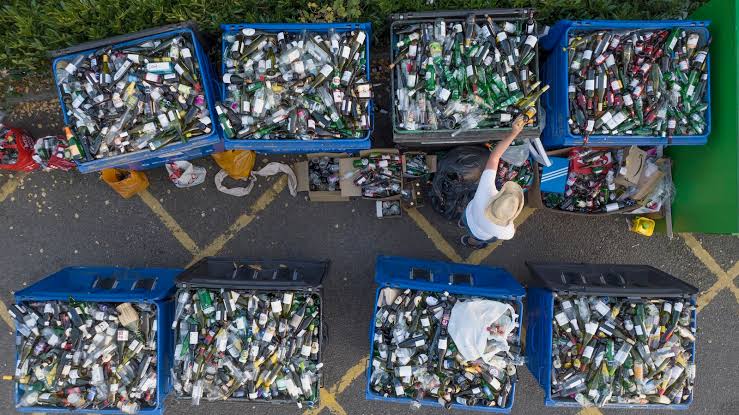
On July 15, 2026, a federal judge blocked California from enforcing SB 343, the state's "truth in recycling" labeling law, just weeks before it was set to take effect on October 4. Packaging trade groups had sued on First Amendment grounds, and Judge William Q. Hayes ruled the law "more extensive than necessary," leaving California Attorney General Rob Bonta enjoined from enforcing it "until further order of the Court" (Packaging Dive).
For haulers and MRFs watching this fight from the sidelines, the injunction might look like a reprieve. It isn't. While the state's regulatory law sits frozen in litigation, a private class action against Colgate-Palmolive just got a trial date, and plaintiffs' attorneys have confirmed they plan to subpoena MRFs and waste management companies operating in California, including WM and Republic Services, for their processing and acceptance records (Waste Dive). The regulation is on hold. The discovery requests aren't waiting for it.
What SB 343 would have required. The law would have barred the chasing arrows symbol, and most other recyclability claims, unless a product is actually accepted by recycling programs covering at least 60 percent of California's population, processed by facilities covering 60 percent of those programs' downstream reclaimers, and free of labels, inks, or adhesives that interfere with recycling (CalRecycle). It applied to any producer selling into California, in-state or not.
Why a court put it on ice. The Flexible Packaging Association, the American Forest & Paper Association, and more than a dozen other trade groups sued in March 2026, arguing the standard was so vague that manufacturers would simply drop recyclability claims rather than risk enforcement, the opposite of the transparency the law was written to create. The court agreed, and the October 4 deadline is now on hold pending further litigation.
The lawsuit that never needed SB 343. Colgate-Palmolive has been fighting a toothpaste tube recyclability case since 2023, built entirely on existing false advertising and consumer protection statutes, no new law required. A California class was certified in April 2026 covering everyone who bought labeled "recyclable" tubes since August 2019. Colgate's appeal was denied in July. A jury trial is now set for April 10, 2028, and discovery is already underway, running straight through the MRFs and haulers who'll be asked to hand over records on what actually happens to that packaging after it leaves the curb.
What this means for your operation, regardless of what happens to SB 343:
Your acceptance lists and processing records are evidence now, not just paperwork. When a producer's recyclability claim gets challenged, plaintiffs' attorneys go looking for the facility that actually handled, or rejected, the material in question. That's your MRF.
"We've always sorted it this way" doesn't hold up under subpoena. Informal sorting decisions and undocumented downstream market relationships are hard to defend when you're asked to produce years of records on short notice.
This isn't only a California problem. Every state building out an EPR program, from Oregon to Colorado to Maryland, is leaning on the same kind of documentation: what you accept, what you process, and where it actually goes. That expectation is only going to spread.
Dump tickets and scale records are the backbone of that paper trail, and they're exactly the kind of documentation that's hard to produce quickly when it's still sitting in a filing cabinet or a stack of driver photos. Digitizing and organizing that data isn't just an efficiency play anymore, it's discovery-readiness. Bond4Waste's dump ticket OCR software turns that paper trail into searchable, dated records automatically, which matters a lot more when a subpoena, not just an auditor, might come asking for it.
Bottom line: SB 343 being blocked doesn't mean recyclability claims are off the hook, it means the fight moved from Sacramento to the courtroom, where it was already headed anyway. Haulers and MRFs don't control what producers print on their packaging, but they do control whether their own acceptance and processing records can back up or contradict those claims. Get your documentation in order before someone else asks for it under oath.
Related reading

California’s SB 343 Hits a Legal Speed Bump — Contamination Won’t Wait
A court just slowed California’s truth-in-recycling law, but the curbside stream isn’t getting any cleaner on its own. Operators should treat this as a planning window, not a pass.

Court puts California’s recycling label law on ice — what that means for contamination and contracts
A federal judge just blocked enforcement of California’s SB 343, the “Truth in Recycling” law. That keeps the chasing-arrows status quo alive — and it changes the operational math for haulers and MRFs right now.

California’s labeling law is on ice — your contamination problem isn’t
A federal injunction paused SB 343, but it didn’t make yogurt tubs magically recyclable. The legal fight may comfort brands; it changes very little for MRFs and haulers facing residue, downgrades and angry customers.