California Just Cut Its SB 54 Plastic Baseline by 64%. Here's What Haulers and MRFs Should Read Into It.
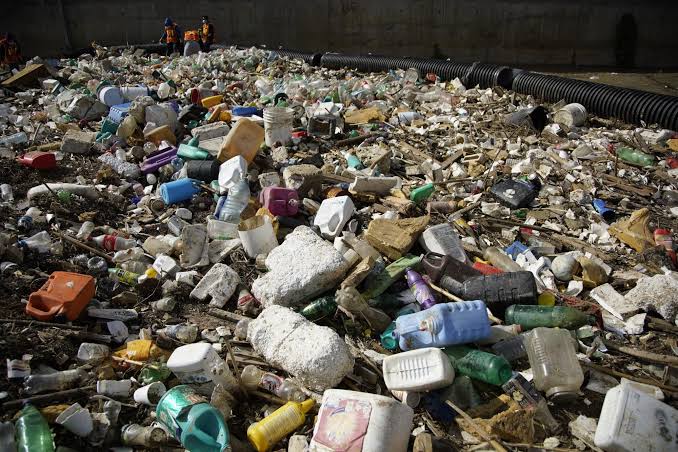
On Nov. 2, CalRecycle quietly rewrote one of the most important numbers in California's packaging law. The updated SB 54 source reduction baseline now puts plastic covered material sold in the state at 1.03 million tons, down from the 2.9 million tons in the original report. At the same time, the item count rose from 171.4 billion to 222 billion plastic components, according to Waste Dive's coverage.
Fewer tons. More pieces. If you collect, sort, or market recyclables in California, or in any state watching California's playbook, that combination deserves attention.
Why the baseline matters
SB 54 requires producers to cut plastic packaging by 10% by 2027, 20% by 2030, and 25% by 2032, measured against the 2023 baseline. Ten percent of the 2032 target has to come from reusable or refillable formats. Producers can also count up to 8% of a given year's requirement through postconsumer recycled content.
A smaller starting tonnage means a smaller absolute reduction owed. UC Santa Barbara's Benioff Ocean Science Laboratory said it was "surprised to see the mass for the updated baseline number go down and the number of items go up," and warned that a baseline that starts too low shrinks what producers must eliminate. CalRecycle acknowledged that not every producer has submitted accurate data and said missing producers will be added in a future correction. You can review the agency's materials on its source reduction page.
What this means on the ground
The numbers are provisional, but the direction is worth planning around. Three practical points stand out:
Don't count on a big drop in plastic tons. If the baseline holds, the tonnage reduction producers must deliver is far smaller than earlier projections implied. Your plastic volumes in 2027 and 2028 are unlikely to fall off a cliff because of SB 54 alone.
Expect smaller, lighter items. A rising item count against falling weight points to lots of small, lightweight components. For a MRF, that means more pieces per ton across the line, more pressure on optical sorters and screens, and more material that slips to residue.
Hold your cost assumptions loosely. Program funding, collection standards, and eventual payments to local governments and processors are all downstream of data that is still being corrected. Any contract language that references SB 54 reimbursements deserves a fresh read.
The data is still moving
CalRecycle based the update on Circular Action Alliance calculations from company-level data submitted by 2,127 producers, which the agency says is about half of participating producers. Individual source reduction plans were reviewed by CAA but not sent to CalRecycle one by one.
On the approval side, CalRecycle has 75 calendar days from CAA's Oct. 13 submission of its revised program plan to decide. By our count that lands around Dec. 27, though the agency has not published a date. The SB 54 advisory board was scheduled to discuss the revised plan on Nov. 6. Watch the plan review and the promised baseline correction closely, since either could move the numbers again.
What to do this week
Pull your own California plastic stream data by resin and format, if you have it. Tonnage alone will not tell you what your lines are about to see. Track item-level trends in residue, jams, and bale quality, and keep a record of any shifts you notice. If you negotiate municipal contracts, build in language that lets you reopen terms when program rules or funding formulas change.
Outside California, other EPR states are working from their own producer data and their own assumptions. If one state's baseline can move by two-thirds in a single revision, treat every early EPR number as a draft.
Bottom line
California's lower plastic baseline means smaller mandated reductions in weight, not a lighter sorting job. The item count went up, the data is incomplete, and a correction is coming. Plan for provisional numbers, protect your contract flexibility, and measure what actually shows up at your scale and on your line.
Related reading

SB 54’s Hardest Hammer Drops This Summer — And It Won’t Just Hit CPGs
California’s EPR law pushes beyond recycling targets into mandated source reduction. That shift will ripple straight through hauling routes, MRF capex, and municipal contracts — beginning with August filings.

California’s $9B Packaging EPR Is About to Rewrite Your P&L
Circular Action Alliance’s draft plan for California’s SB 54 puts more than $9 billion into the system over five years — and asks to push back an early source-reduction milestone. That combination means more material in the stream near-term and a wholesale shift in who pays haulers and MRFs to manage it.

California’s Packaging EPR Just Got Real: SB 54 Turns MRFs Into Compliance Engines
California’s SB 54 isn’t a distant policy anymore — it’s moving from boardrooms to the tip floor. If producers must produce auditable data and pay modulated fees, haulers and MRFs become the proof points — or the bottlenecks.