How AI Robots Are Sorting Recycling Faster Than Humans Ever Could
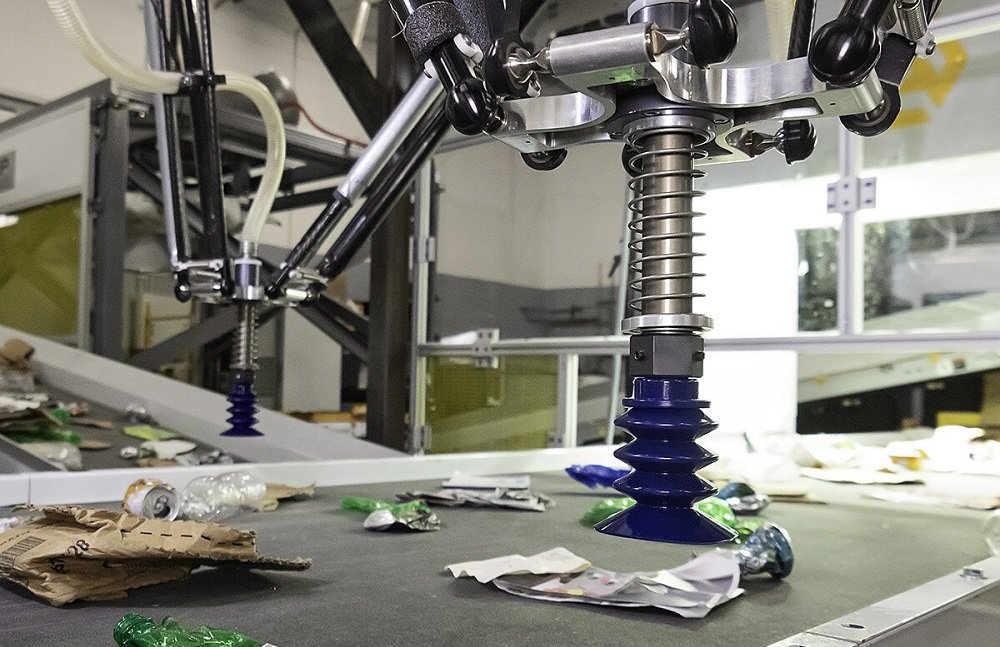
One of the most advanced AI systems in waste management is already working inside recycling facilities across the country.
It doesn’t sit in a control room.
It sits above a conveyor belt.
Companies like AMP Robotics have built computer vision systems that identify, sort, and pick recyclable materials in real time using AI-powered robotic arms.
How the System Works
As mixed recycling moves along a conveyor belt, high-speed cameras scan every item.
AI models trained on millions of images identify materials such as:
Aluminum cans
Cardboard
PET plastics
Glass
Contaminants
Within milliseconds, the system decides what each item is—and whether it should be sorted or rejected.
Robotic arms then physically remove targeted materials with precision timing.
What Makes This “AI” Instead of Automation
Traditional sorting machines rely on simple rules: size, weight, or basic optical properties.
AI systems go further.
They can recognize objects even when they are:
Crumpled
Partially covered
Dirty or damaged
Mixed with other materials
That adaptability is what makes the system intelligent rather than mechanical.
Why Recycling Facilities Are Adopting It
Material recovery facilities operate under constant pressure:
High labor costs
Contamination in recycling streams
Inconsistent material quality
Tight processing timelines
AI sorting systems help address all four.
They increase accuracy, reduce contamination, and improve the overall value of recovered materials.
The Bigger Shift
What’s happening inside recycling plants is part of a larger transformation.
Waste is no longer just being collected and transported.
It is being analyzed, classified, and optimized in real time.
Computer vision systems are turning recycling from a manual sorting process into a data-driven manufacturing workflow.
And this is just the beginning.
At Bond4, we see AI sorting systems as a foundational shift in waste infrastructure—where intelligence moves from the office into the facility floor itself.
Related reading

Most Recycling Programs Are Failing—And AI Might Be the Only Fix
People love the idea of recycling. The reality is much uglier. A huge percentage of recyclable material never actually gets recycled. Entire truckloads are often rejected because…

5 Signs Your Waste Operation Needs AI Automation
Most waste companies don’t realize how much money they’re losing until they start measuring inefficiencies closely. Missed pickups. Overflowing containers. Fuel waste. Driver down…

Machinex bets on AI as the control layer for the MRF
This isn’t just another robot-on-a-belt story. Machinex is tying vision, optics, and air to a single AI brain — and staking a claim on the data that powers it.